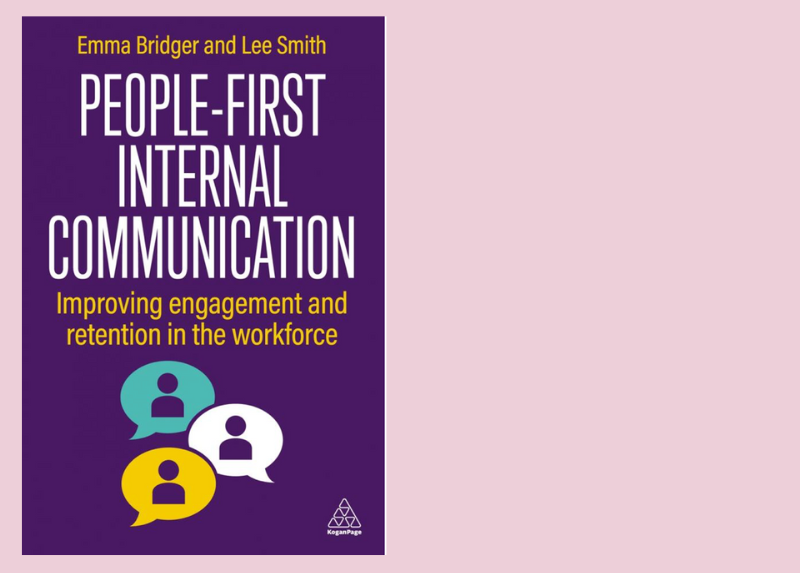
The conversations landing in my inbox are less about “interesting ideas” and more about finally feeling seen as practitioners who have always believed IC could be something more human, more strategic, and more meaningful than the narrow role it’s often been boxed into.
Launching the book has felt less like a broadcast moment and more like opening the door to a room we’ve all been waiting to gather in. A place where people can finally express what they’ve been thinking, feeling, wrestling with, and imagining for years.
And now that we’re in the room together, something powerful is beginning to take shape.
A few themes keep surfacing — from emails and DMs to conversations...
1. People are hungry for a reframing of internal communication
Not as a delivery arm, not as an order-taker, not as the corporate megaphone — but as a design discipline rooted in insight, intention and human experience. For so many, this reframing isn’t new. It’s a way of working they’ve instinctively gravitated toward for years, often without acknowledgement or language to articulate it. The relief in finally having shared words for it is palpable.
2. The language of people-first practice resonates deeply
Empathy. Insight. Collaboration. Co-design. Not as soft skills, but as strategic levers for culture, trust and engagement. People have said the book gave them permission to name what they’ve always known: that internal communication shapes how people feel, not just what they know.
3. The shift from ‘doing things better’ to ‘doing better things’ is landing
It speaks to a growing recognition that our work needs more than efficiency, more than polished outputs, more than campaigns that look good but change little. What we need is purposeful practice — work that makes things better for the humans inside the organisation.
That desire for a deeper shift is exactly what sparked our Manifesto for People-First Internal Communication, which we share in the final chapter of the book.
Because a book can spark a conversation, but a manifesto helps sustain and steer one.
The manifesto isn’t a set of rules.
It’s not a framework or a process.
It’s a compass — something to hold onto when the inbox, the urgency, the politics, and the noise try to pull us back toward old habits.
It reframes internal communication as:
- a strategic, human-centred practice,
- a contributor to culture, trust and experience,
- and something that is done with people, not to them.
It calls us to listen first, design with empathy, prototype small, learn fast, and shape systems — not just outputs. And crucially, it’s a beta version.
A starting point, not a finished statement.
A shared artefact this community can evolve, challenge, reshape and make its own.
Because a people-first practice has to be a people-built practice.
One thing the launch has made clear is that people are not just looking for inspiration — they’re looking for practical ways to build people-first capability in their own organisations.
Which is why we’ve aligned the manifesto with two key pathways on EX Space, designed to help practitioners move from awareness to action:
✨ People-First IC Explorer (FREE)
A foundational, self-paced introduction for anyone curious about the mindset, principles and behaviours behind People-First IC.
It’s included in our free Essentials signup and is perfect for:
- early-career practitioners
- comms teams wanting a shared starting point
- leaders or partners wanting to understand the shift
🚀 People-First IC Architect (PRO)
A deeper, more advanced course for practitioners who want to operationalise the people-first approach — shaping strategy, designing experiences, using insight intentionally, and influencing systems from the inside out. It’s hands-on, practical and built for those ready to lead the shift, not just understand it.
These pathways give structure, support and shared language to a movement that is already happening — helping practitioners transform the principles of people-first practice into day-to-day reality.
We’re spending the next phase listening — to reflections, reactions, questions and ideas from practitioners, leaders and teams who want to help shape what People-First IC becomes next.
Because this book is not an ending.
It’s the beginning of a collective effort to raise the bar for internal communication, not through rules or rigidity, but through shared intention and human-centred practice.
If you’d like to get involved — to respond to the manifesto, share how this resonates, or explore how these ideas might shape your team’s work — the door is open.
This moment feels like the beginning of something bigger than a book.
It feels like alignment.
It feels like momentum.
And it feels like we’re building it together.