Let’s
start at the beginning – to measure employee experience effectively, you need
to be clear about what it is you are measuring and what it is you are trying to
achieve. At the broadest level, you might
want to measure the overall experience your people have at your organisation.
But there is no single universal definition of EX, so a critical first step is
to figure out what EX means for your organisation and why you’re focusing
on it. Once you’re clear on this, you can then being to consider what you are
going to measure.
Definitions
of EX are wide-ranging. Some can be helpful to determine what you need to
measure, others less so. Let’s consider this definition from Maylett and Wride
(2017):
“EX
as the sum of the perceptions employees have about their interactions with
their organization”
There
is nothing wrong with this definition, but understanding how to use it to
measure your EX is complex and not immediately evident. You’d need to
understand how to measure perceptions, decide which perceptions to measure, and
consider how to measure interactions, and which interactions to measure. This
is achievable but not straightforward.
Let’s
now consider a definition of EX used by a client of ours:
“EX
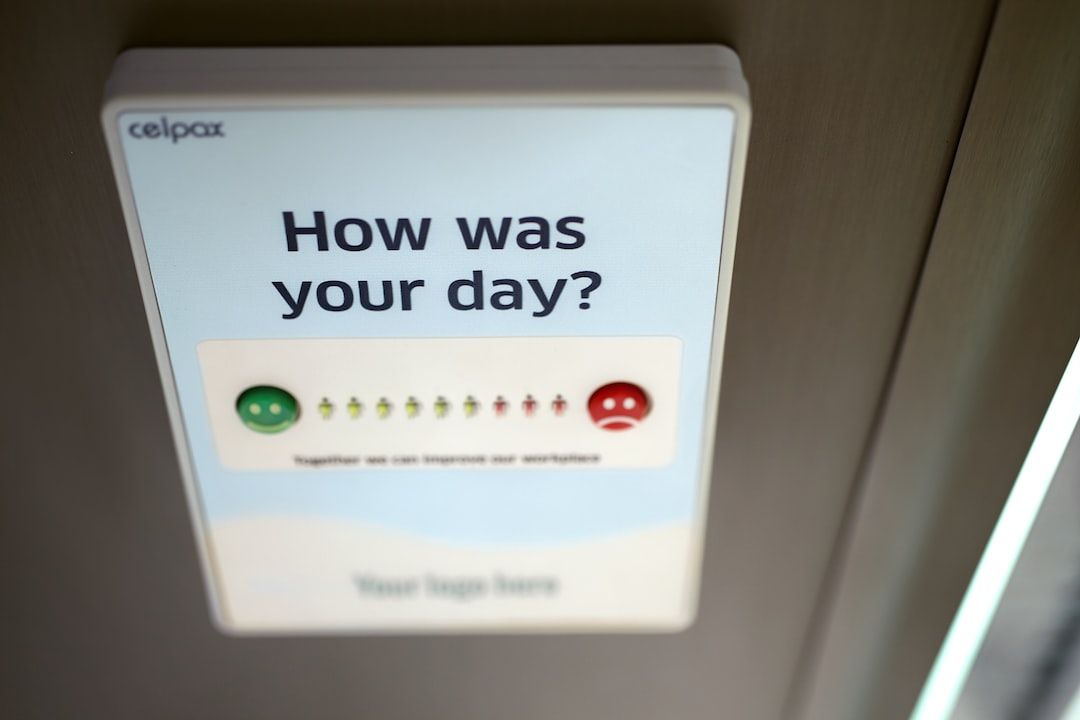
is all about enabling our people to have more good days at work”
Immediately
it’s clear that this way of defining EX is more straightforward, and it’s
easier to see how you could go about measuring this. When looking to measure
the overall experience your people have with your organisation, we recommend
developing your own approach first.
Of
course, you may wish to measure specific lifecycle-related employee
experiences, such as on-boarding, or return to work after an extended leave of
absence. Measuring a specific experience is much more straightforward,
given you have already answered your first question: what are you trying to
measure?
When
planning your measurement approach, it is also important to make the
distinction between the experience itself (e.g. was it good or bad), and the
desired outcomes of the EX (e.g. reduced employee turnover at the end of on-boarding).
Remember
that EX is not an outcome itself, but something which will help you to achieve
the outcomes you are looking for. Getting clear on what it is you are looking
to measure, and the outcomes you are hoping for, is the starting point for your
approach.
Corine
Boon, associate professor at the University of Amsterdam and Director at the
Amsterdam people analytics centre, recommends making the distinction between EX
intentions, what is actually implemented, employee perceptions and outcomes. Put
simply:
Intended: what are we trying to do e.g.
provide a brilliant on-boarding programme
What is actually implemented: an
on-boarding programme
Perceived: this is essentially the
experience, and how your people experience what you offer e.g. that was a
fantastic on-boarding experience - You can evaluate how near or far the
reality of the EX is from the intended EX
Outcomes: What happened and what was the
result e.g. employees are more likely to stay now we have this new
on-boarding programme and their engagement is higher as a result
We
think it’s helpful to unpack EX in this way and think about these four
different levels of impact.
Your
EX measurement approach should ideally look at the overall EX as well as
specific experiences, given the dependant nature of the two. We know that
experiences do not happen in isolation, and there are many factors which
contribute to the overall experience your people have. Contemplating how you
measure the overall EX can feel quite overwhelming, but it doesn’t have to be.
Developing
your EX measurement approach – to survey or not to survey?
We’re
seeing a rise in survey providers offering tools and approaches to measure and
benchmark your EX index. Their approaches are based on research, resulting in a list of attributes, which the authors argue either measure EX itself or
have a real and measurable impact on EX.
The
problem with this approach is that, firstly, there is no single universal
definition of EX, secondly, what constitutes a great experience is not
universal or uniform, and thirdly, what drives a great experience within the
context of your organisation will be unique to you.
There
are almost certainly some universal elements of what constitutes and drives a
great EX, but at the same time there will always be organisational differences
too. If we take an ‘off-the-shelf’ approach to measuring EX, we are making
assumptions about what a great EX is and what drives it, and subsequently the
findings we get could lead us to working on the wrong things.
To
measure your overall EX, you might be tempted to try and develop an EX index - our advice is please don’t! While it’s tempting to combine a number of elements
into an overall score, the problem is that this is pretty meaningless, it won’t
give you a measure of the overall EX. In addition, an EX index score might give
you a temperature check of how your people experience your organisation, but it
doesn’t give direction on what to work on to improve your EX. You may
find you get a top quartile employee index score from an off-the-shelf survey,
but this doesn’t really demonstrate the value add, and positive impact,
achieving a score like this actually has on a business.
If
you do want to run a survey to measure your EX, whatever this means for you,
you need to develop your own set of measures to do this. The good news is it
isn’t as complex as it sounds. This process starts with by finding out what a
great experience looks like and feels like for your people. You can then use
these insights to develop a survey, to understand how near or far you are from
this ideal experience, as defined by your people. Of course you can add in
further questions relevant to your organisational context, but this is really
the best way to approach measuring your umbrella EX.
Related Resources
Created with
Login or sign up to start learningLogin to start learning