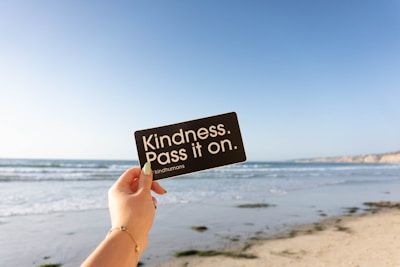
There’s a reason acts of kindness feel good. Both for the giver and the receiver. Research in positive psychology shows that acts of kindness:
- increase dopamine and serotonin, boosting mood
- trigger oxytocin, strengthening trust and connection
- create a sense of meaning and contribution
- increase perceived social support
In other words, kindness regulates threat and amplifies belonging.From a neuroscience perspective, our brains are constantly scanning for cues: Am I safe here? Do I matter? Do I belong?
Small, unexpected acts of kindness answer those questions in the affirmative. A thoughtful message. A public thank you. A manager who notices effort, not just output. A colleague who checks in without an agenda.
These are micro-signals of psychological safety. And micro-signals compound.
In EX, we talk a lot about moments that matter. But not all meaningful moments are big.
Promotions, restructures, onboarding and exits get most of the design attention. Yet the texture of everyday experience is shaped by micro-moments.
Kindness lives in those micro-moments.
It shows up in:
- how feedback is delivered
- how meetings are run
- how decisions are explained
- how leaders respond under pressure
- how peers treat each other when no one is watching
If experience is the sum of what people see, feel and believe at work, then kindness is one of the fastest ways to shift that sum. It changes the emotional tone of an organisation. And tone is contagious.
Behaviour spreads.
Studies on social contagion show that prosocial behaviour increases the likelihood of others behaving prosocially. In simple terms: when someone witnesses kindness, they are more likely to act kindly themselves.
In organisational systems, that matters.
Because culture is not a values poster. It’s patterns of behaviour repeated at scale.
Random acts of kindness interrupt negative spirals. They introduce positive deviations. They create new micro-norms.
- A leader modelling appreciation changes what “good leadership” looks like.
- A team openly supporting each other shifts what “high performance” feels like.
Kindness is rarely neutral. It either builds trust capital or it repairs trust debt.
Random acts of kindness are powerful.
But in experience design terms, randomness alone won’t sustain change.
If kindness only appears on themed days, it feels performative.
If it depends on personality, it feels inconsistent.
If it relies on individual goodwill, it doesn’t scale.
This is where experience design comes in.
What if instead of asking, “What random act can we do today?” we asked:
Where in our employee lifecycle does kindness drop away?
At what pressure points do people most need human signals?
How can we design systems that make kindness the default, not the exception?
For example:
- Building appreciation rituals into team meetings
- Designing feedback frameworks that foreground strengths and effort
- Equipping managers with prompts for human-centred check-ins
- Embedding peer recognition into digital workflows
- Auditing high-friction processes for tone and empathy
Kindness doesn’t have to be grand. But it does need to be intentional.
If you want to mark Random Acts of Kindness Day in a way that aligns with EX practice, try this:
- Pick one everyday interaction and redesign it with intentional kindness.
- Rewrite a piece of feedback with more care and clarity.
- Thank someone for effort, not just outcome.
- Send a note to someone whose work often goes unseen.
- Add a human sentence to a standard comms message.
...Then notice what happens. Not just to the other person. But to the energy in the exchange.
Experience shifts rarely start with grand transformation programmes. They often begin with one small, human choice.